Decoding Happiness

The most important finding is that happiness does not really depend on objective conditions of either wealth, health or community, rather it depends on the correlation between objective conditions and subjective expectations, like, if you want a bullock cart and get a bullock cart, you’re content, if you want a brand new ferrari and get a second-hand fiat you feel deprived. – Yuval Noah Harari

Decoding Happiness is an organized summary of thoughts presented on the eternal human need of ‘Being Happy’, as presented by two of the best modern day minds through their books; “The Almanack of Naval Ravikant”, by Eric Jorgenson and “Sapiens” , by Yuval Noah Harari.

While Jorgensen’s book draws from a plethora of references and experiences of modern day life, Harari presents happiness in the context of the learnings and teachings of Buddha. What is remarkable to note is that while mankind has evolved from the era of Lord Buddha to one of Artificial Intelligence, the definition of happiness, and how to be happy remain unchanged.

What is Happiness?

Happiness is a state when nothing is missing – when there is an internal silence, when the mind shuts down and stops regretting the past or worrying about the future.

Happiness is ever evolving. Happiness is more about peace than it is about joy. Peace is happiness at rest, and happiness is peace in motion.

True happiness is independent of external conditions and of our inner feelings. Indeed the more significance we give to our feelings, the more we crave them, and the more we suffer. Buddha’s recommendation was to stop not only the pursuit of external achievements, but also the pursuit of inner feelings.

Envy is the enemy of happiness

According to Buddhism, the root of suffering is neither the feeling of pain nor of sadness nor even of meaninglessness. Rather the real root of suffering is this never-ending and pointless pursuit of ephermal feelings, which causes us to be in a constant state of tension, restlessness and dissatisfaction. Due to this pursuit the mind is never satisfied. Even when experiencing pleasure, it is not content, because it fears this feeling might soon disappear, and craves that this feeling should stay and intensify.

How Can Mankind Be Happy ?

Happiness requires presence. A lot of unhappiness comes from comparing things from the past to free present. Memory and identity are burdens from the past preventing us from living freely in the present.

Happiness is not measured by the same set of universal parameters for all. For some, it’s contentment and satisfaction. For others it could be having things that they want in life.
Happiness is there when you remove the sense of something missing in life. It’s the absence of desire for external things.

People are liberated from suffering not when they experience this or that fleeting pleasure, but rather when they understand the impermanent nature of all their feelings, and stop craving them. This is the aim of Buddhist meditation practices.

In meditation you’re supposed to closely observe your mind and body, witness the ceasing arising and passing of all your feelings, and realise how pointless it is to pursue them. When the pursuit stops, the mind becomes very relaxed, clear and satisfied.

Happiness, love, and passion aren’t things you find – they are choices you make.

Like fitness and nutrition, happiness is a personal choice that can be practiced by following your own set of rules and techniques that make you happy.


Can Money Buy You Peace and Happiness ?

Money buys you freedom in the material world. It’s not going to make you happy – but it will remove the set of things that could get in the way of being unhappy. It’s not going to solve your health problems, it’s not going to make your family great, it’s not going to make you fit, it’s not going to make you calm. But it will solve a lot of your external problems. It’s therefore important to go ahead and make money. You can save money, you can choose to live a little below your means, and you can find a certain freedom. That will give you the time and energy to pursue your own internal peace and happiness. The solution to making everybody happy is to give them what they want.

Source : Adapted from “The Almanack of Naval Ravikant”, by Eric Jorgenson

What to Read and How ?

  1. Focus on getting to build a solid foundation. Read those books which help you to built this foundation.
  2. Read the originals, read the classics.Read the greats in maths, science, microeconomics and philosophy. Ignore contemporaries and news
  3. Reading the book isn’t a race – the better the book, the more slowly it should be absorbed
  4. Most books have one point to make, they make it, and then give you examples after examples to apply it to everything in the world. Once you get the gist, you don’t have to read the whole book. You can put it down.

Source : Adapted from “The Almanack of Naval Ravikant”, by Eric Jorgenson

This is the Only Time…

This is the only time, when you have a reason to get disconnected from everything in the outside world,
This is the only time you have to do what you always wanted to, and shift your focus inwards.
This is the only time that the world has come to a halt, and everyone is under house arrest,
This is the only time, where there will be peace and no war, no processions or protests.
This is the only time that you don’t need to rush, rush, rush with your daily chores,
This is the only time that you won’t be wasting precious hours on the roads.
This is the only time that there is no office, no client visits, no product deliveries, and no urgent calls,
This is the only time you can’t say – I get little time at home, with family and kids, or tell friends that have been too busy to call.
This is the only time when you can’t buy tickets for the show, the only time you can’t go on vacations,
This is the only time when you can’t party hard, and there ain’t any social obligations.
This is the only time you can’t complaint – life’s way too fast, time flies and that days just go by,
This is the only time because there aren’t any trains to catch, or airplanes in the sky.
This is the only time that birds would own the skies and fishes shall rule the waters,
This is the only time to breathe fresh air, as nature has been gifted with time to recover.
This is the only time to acknowledge that nature doesn’t differentiate status, country, caste or religion,
This is the only time when one can’t go searching for Gods in the temples, mosques, gurudwaras or churches.
This is the only time when we shall know the things that money can’t buy,
This is the only time when we shall know the difference between our needs and our wants.
This is the only time to accept that not everything is in our control,
This is the time to acknowledge that no matter how much we plan,
In the end, things will happen as per, “The Master’s Plans”.
This is the only time that you have time,
This is the only time to get back to being yourself,
This is the only time you’ve got to revisit all the good things, that you saved for this rainy day.
This is the only time, because, Life is Now and not on the other side of the 21 days.
Jayesh Tekchandaney

25th March, 2020

Relationships

Relationships
Relationships heal, Relationships hurt,
Relationships trust, Relationships betray,
Relationships bring success, Relationship cause fall,
Relationships sacrifice, Relationships compromise.
Relationships control, Relationships dictate,
Relationships plead, Relationships persuade,
Relationships threaten, Relationships protect,
Relationships stir emotions, Relationships control state.
Relationships born, Relationships formed,
Relationships chosen, Relationships gone,
Relationships develop, Relationships evolve,
Relationships remain, Relationships fail.
Relationships tested by time,
Relationships tested by situations,
Relationships tested by expectations,
Relationships tested by relationships.
Relationships talk in words, Relationships speak in silence,
Relationships however strong, Relationships are fragile,
Relationships may forgive, Relationships cannot forget,
Relationships may be down, Relationships can rise again.

Japji Sahib, The Mool Mantar

Japji Sahib

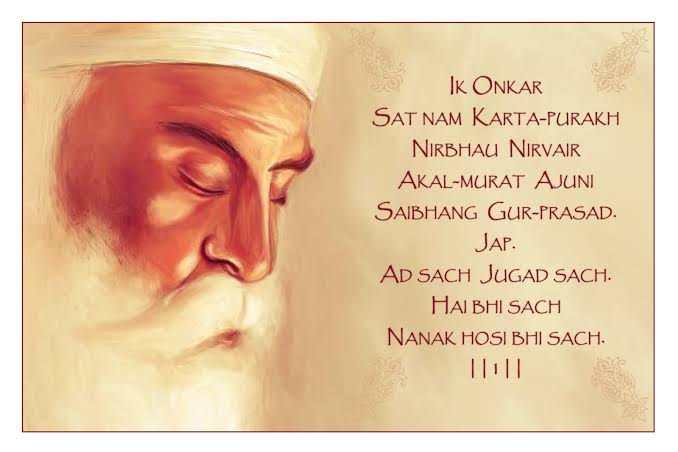
Japji Sahib , is the first chapter of the Guru Granth Sahib, composed by Guru Nanak, the first guru and the saintly founder of the Sikh religion. The Japji Sahib is considered to be the essence of the Guru Granth Sahib and of Sikh thought. It is of eternal importance because it deals with the perennial philosophy, preaches love, brotherhood and compassion. The Japji Sahib comprises of the mool mantar (the basic sacred teaching) and two slokas as prologue and epilogue; the Japji Sahib also consists of 38 pauris (poems).
The Mool Mantar

Ik­-onkaar sat Naam karta purakh, nirbha­-o nirvair akaal moorat, ajoonee saibhan gur parsaad,
Jap, Aad sach, Jugaad sach, Hai bhee sach, Naanak hosee bhee sach

Ik­-Onkaar : There is but one God
Sat Naam : True in His Name
Karta Purakh : He is the creative power personified
Nirbha­-o Nirvair : He is without fear; without enmity
A-Kaal Moorat : He is timeless, without form; beyond birth and death
Ajoonee Saibhan : He is unborn, self existent, self illuminated and self sustaining
Gur Parsaad : He is realized through the Guru’s divine grace
Jap : Recite, reflect and meditate.
Aad sach, Jugaad sach,
Hai bhee sach, Naanak hosee bhee sach
He was true in the primal beginning before the ages began. True through all the ages, He is still the truth here and now; and O Nanak, true shall He ever remain.

Many regard this last ‘Jap’ part as the sloka following the mool mantar.

Ik Onkaar is the seed of the Sikh faith. The Mool Mantar is its root. Japji Sahib is the trunk of the Sikh faith. The rest of the Guru Granth Sahib are the branches, leaves and flowers.

There is no religion higher than the truth, said Guru Nanak. God is the ultimate truth, and this truth shall prevail. Let us therefore resolve: to seek God, the truth of all truths. Speak the truth, worship the truth, and bear witness to the truth in deeds of daily living.

Happy Guru Purab

The Man Who Thinks He Can – Walter D. Wintle

If you think you are beaten, you are
If you think you dare not, you don’t,
If you like to win, but you think you can’t
It is almost certain you won’t.
If you think you’ll lose, you’re llos
For out of the world we find,
Success begins with a fellow’s will
It’s all in the state of mind.
If you think you are outclassed, you are
You’ve got to think high to rise,
You’ve got to be sure of yourself before
You can ever win a prize.
Life’s battles don’t always go
To the stronger or faster man,
But soon or late the man who wins
Is the man WHO THINKS HE CAN!

How To Live & Die – By Khushwant Singh

I’ve often thought about what it is that makes people happy—what one has to do in order to achieve happiness.

1- First and foremost is good health. If you do not enjoy good health, you can never be happy. Any ailment, however trivial, will deduct something from your happiness.
2- Second, a healthy bank balance. It need not run into crores, but it should be enough to provide for comforts, and there should be something to spare for recreation—eating out, going to the movies, travel and holidays in the hills or by the sea. Shortage of money can be demoralising. Living on credit or borrowing is demeaning and lowers one in one’s own eyes.
3- Third, your own home. Rented places can never give you the comfort or security of a home that is yours for keeps. If it has garden space, all the better. Plant your own trees and flowers, see them grow and blossom, and cultivate a sense of kinship with them.
4- Fourth, an understanding companion, be it your spouse or a girlfriend or a best friend. If you have too many misunderstandings, it robs you of your peace of mind. It is better to accept the differences than to be quarrelling all the time.
5- Fifth, stop envying those who have done better than you in life—risen higher, made more money, or earned more fame. Envy can be corroding; avoid comparing yourself with others.
6- Sixth, do not allow people to descend on you for gossip. By the time you get rid of them, you will feel exhausted and poisoned by their gossip-mongering.
7- Seventh, cultivate a hobby or two that will fulfill you—gardening, reading, writing, painting, playing or listening to music. Going to clubs or parties to get free drinks, or to meet celebrities, is a criminal waste of time. It’s important to concentrate on something that keeps you occupied meaningfully.
8- Eighth, every morning and evening devote 20 minutes to meditation or introspection. In the mornings, 10 minutes should be spent in keeping the mind absolutely still, and five listing the things you have to do that day. In the evenings, five minutes should be set aside to keep the mind still and 10 to go over the tasks you had intended to do.
9- Ninth, don’t lose your temper. Try not to be short-tempered, or vengeful. Even when a friend has been rude, just move on.
10- Above all, when the time comes to go, one should go like a Person without any regret or grievance against anyone.

Mother

A young mother set her foot on the path of life. “Is this the long way?” she asked. God replied: “Yes, and the way is hard. And you will be old before you reach the end of it.But the end will be better than the beginning.”

The young mother was happy, but she would not believe that anything could be better than these years. So she played with her little children,gathered flowers for them along the way, bathed them in the natural streams as the sun shone on them. “Nothing will ever be lovelier than this,” she said to God.
Then as the dark stormy night came, her children shook with fear and cold. The mother drew them close and covered them with her mantle, and the children said, “Mother, we are not afraid for you are near, and no harm can come.”
And then morning came, and there was a huge mountain ahead. The children climbed and grew weary. The mother was weary too but at all times she encouraged her children,” A little patience and we will be on top.” So the children climbed, and when they reached the peak they said, “Mother, we would not have done it without you.”
The mother looked at the night sky and as she gazed the stars she thought, “This is a better day than the last, for my children have learned fortitude in the face of hardness. Yesterday I gave them courage. Today, I ‘ ve given them strength.”
And the next day, came angry clouds which darkened the earth. Clouds of war, hate and evil. The children groped and stumbled, and the mother said: “Look up. Lift your eyes to the light.” And the children looked and saw above the clouds an everlasting glory. It guided them beyond the darkness. And that night the Mother said,”This is the best day of all, for I have shown my children God.”
Days went by, weeks passed, and then months and years. The mother grew old, feeble and bent. By then, her children were tall and strong, and walked with courage. When the way was rough, they lifted her, for she was as light as a feather; and at last they came to a hill, and beyond they could see a shining road and golden gates flung wide.
The mother said,”I reached the end of my journey. And now I know the end is better than the beginning, for my children can walk alone, and their children after them.”
Her children said, “You will always walk with us, Mother, even when you have gone through the gates.”
They stood and watched her as she walked alone, and the gates closed after her. And they said: “We cannot see you, but you will always remain with us.”
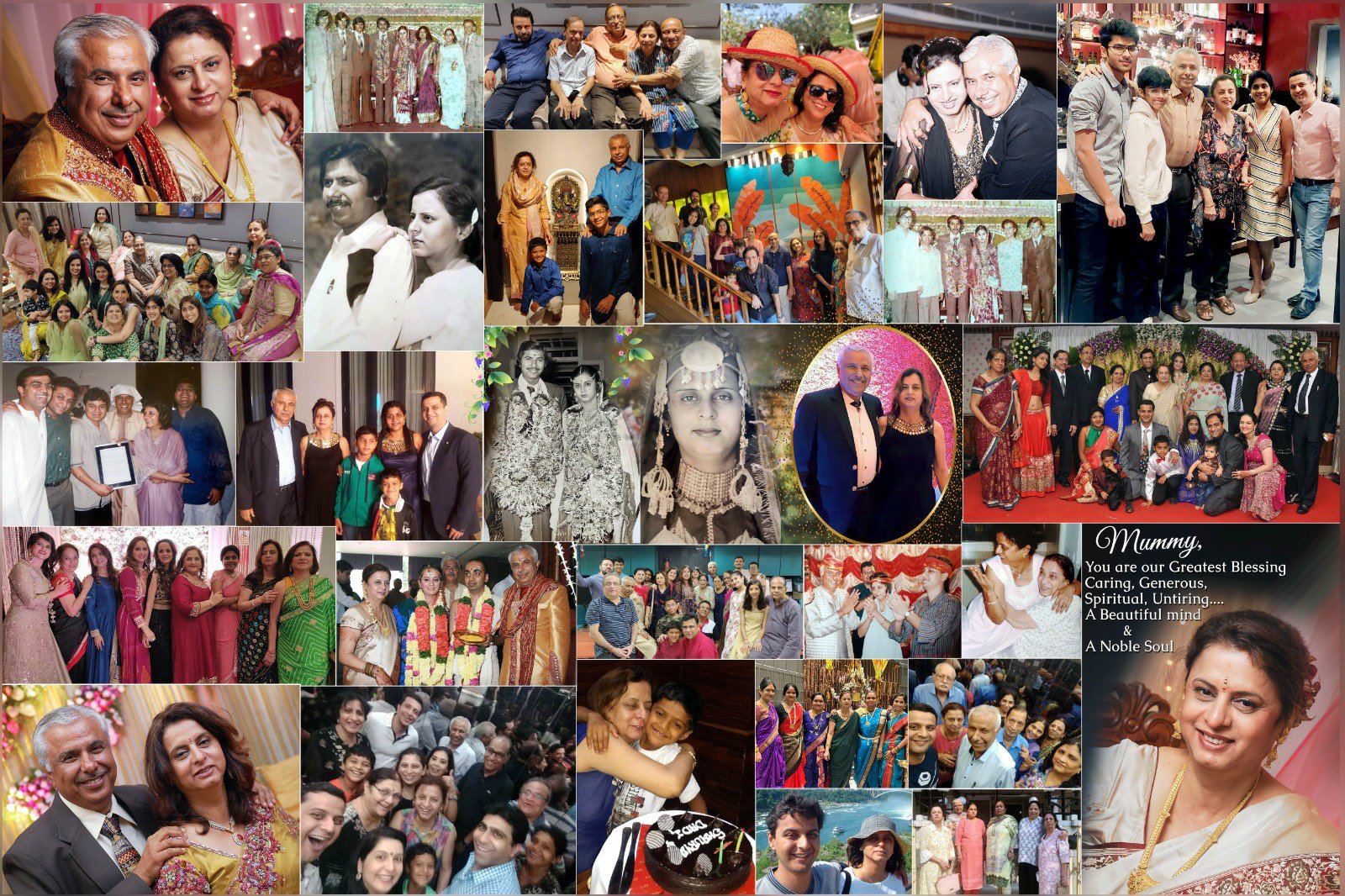
Your Mother is always with you…. She’s the whisper of the leaves as you walk down the street; she’s the smell of bleach in your freshly laundered socks; she’s the cool hand on your brow when you’re unwell.
Your Mother lives inside your laughter. She’s crystallised in every teardrop. She’s the place you came from, your first home; She’s the map you follow with every step you take. She’s your first love and your first heartbreak.
Nothing can separate you from your mother. Not time, not space… not even God!
– Adapted and edited from an anonymous write up.